The Achilles Heel of Cultural Hegemony
Multistable Perception 2
Picasso’s encounter with African art can therefore be understood as more than exposure to unfamiliar forms. It represents a perceptual rupture: a moment when an established way of seeing could no longer completely contain what he was experiencing.
That rupture created the possibility of an Aha moment.
What had previously existed outside the dominant framework suddenly became visible as a source of creative possibility.
Picasso did not simply discover another solution within the existing artistic framework. He started to see the framework differently. Once perception changed, new creative possibilities emerged.
He thought outside the box — and, perceptually, escaped it.
This exposes what I see as an Achilles heel of cultural hegemony. Hegemony attempts to stabilize perception. Creative insight destabilizes it.
The shift also marks a move from reproductive thinking to productive thinking. Reproductive thinking approaches problems through familiar methods and inherited solutions. Productive thinking reorganizes the problem itself, making previously hidden relationships visible.
If perception can reverse figure and ground, then cultural hegemony cannot depend upon the dominant interpretation remaining permanently in the foreground.
What a culture places in the background — people, histories, ideas, objects, or ways of seeing — can suddenly move forward and demand attention. What once appeared marginal can become central. What seemed natural and permanent can be recognized as only one possible interpretation.
The structure may remain.
But the figure and ground can reverse.
And when they do, the dominant way of seeing loses its appearance of permanence.
This is the Achilles heel of cultural hegemony: the human capacity to see the same world differently.


A related idea appears in the work of Naum Gabo and his brother, Antoine Pevsner. Their experiments with space, transparency, movement, and form anticipated a visual language in which an object could no longer be understood only as a fixed, permanent mass.
The fleeting shadow matters because it shows how perception changes with position, movement, and time. A shadow appears, stretches, overlaps another form, and disappears. It possesses no permanent shape, yet it can completely transform how an object is perceived.
Form remains.
Context shifts.
Perception changes.
Meaning changes with it.
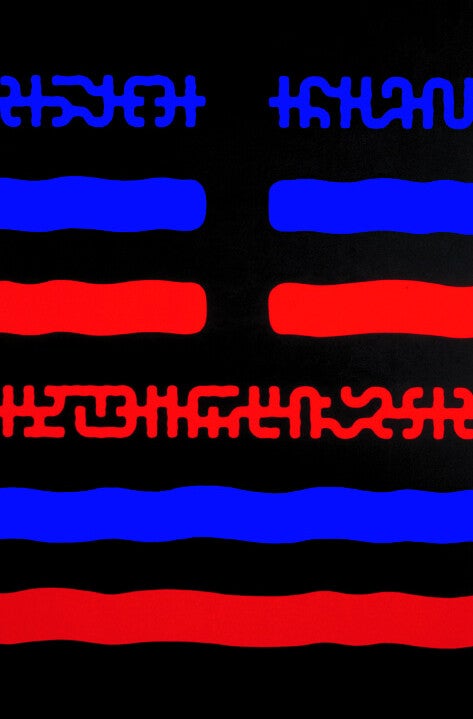
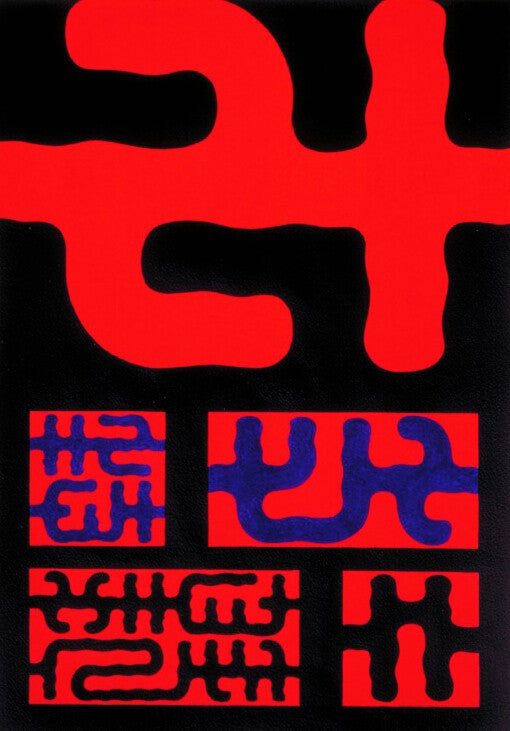
1970s