As I tend the endangered plants beside the shed, a heavy rumble rolls in — deep and insistent, like some enormous compacting machine moving beneath my feet.
At first, confusion grips me. The sound swells. The earth begins to tremble. Then clarity arrives: an earthquake is coming.
The ground heaves in rolling waves.
I watch the footings rise and sink as the quake moves beneath the structure. But what astonishes me most is what happens to the columns. The tremors animate them from the foundation upward.
For a moment, the columns lose their solidity. They vibrate like tuning forks. From the exposed reinforcing steel comes a strange metallic rhythm—a chant.
I had no inkling then of the disclosures that would unfold from that moment.
By persisting and heeding this call of the wild, I came to understand it as a gift from Pele—an environmental signal, something like a Zeitgeber, a regulator of nature’s timing.
In chronobiology, entrainment describes the synchronization of an internal biological rhythm with an external environmental cycle. Light is the most powerful and familiar of these external time-givers. But the larger idea of entrainment opened another possibility for me: that rhythm, repetition, vibration, and environmental forces can bring separate systems into relationship.
Think of the peal of distant bells, a song drifting from a high tower, or the persistent ticking of a metronome. Rhythm reaches outward. One movement encounters another. Gradually, separate patterns can begin to move together.
That day on the lava field, the earthquake became my own form of geo-synchronicity — a profound reset that attuned me to the greater rhythm and flow of the Big Island.
Earth moved. Concrete responded. Steel vibrated. And I listened.
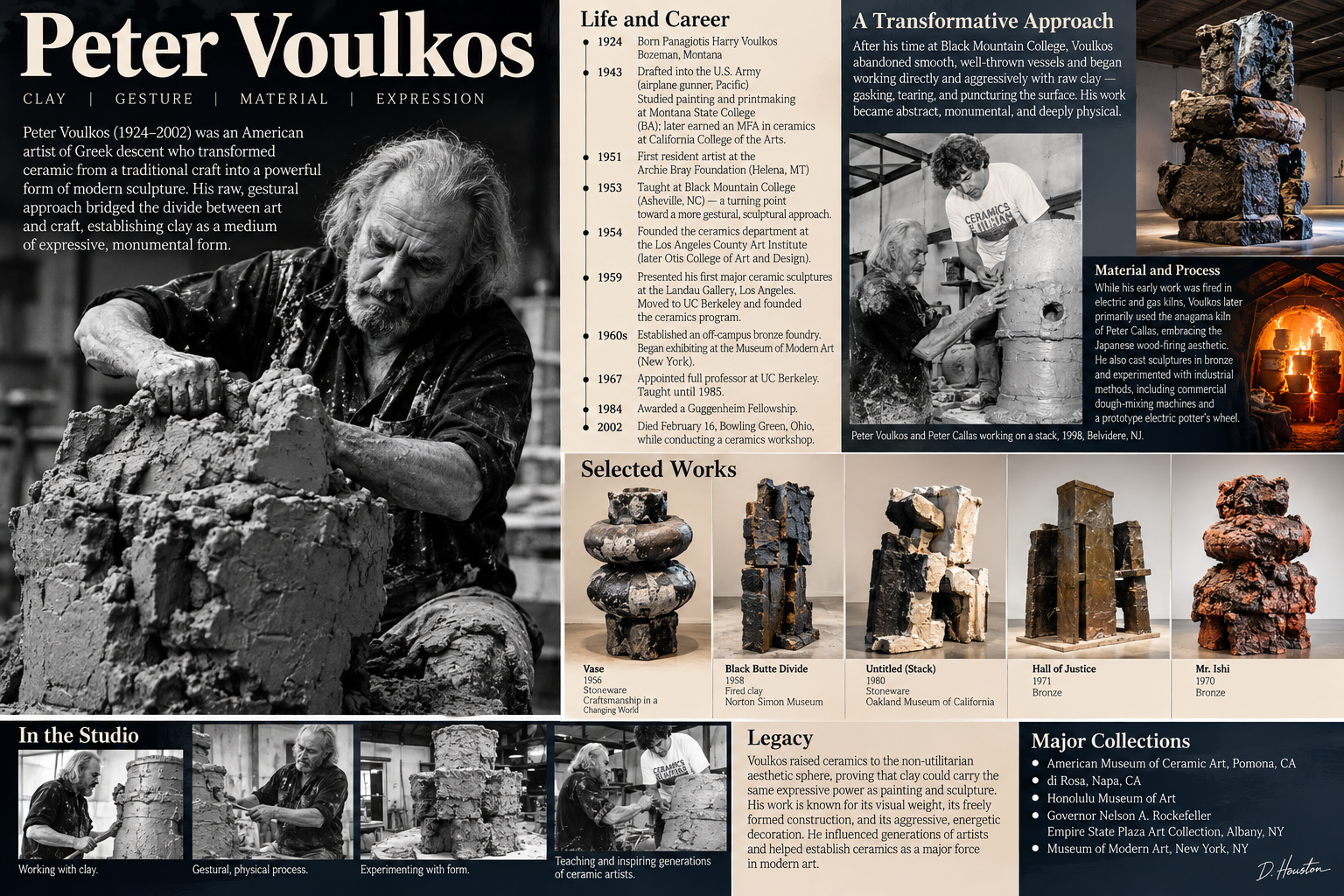
As the quake rippled through the site, a fleeting image of my sculpture teacher Peter Voulkos flashed through my mind and disappeared almost as quickly as it came. I did not understand why. The image slipped away, buried beneath the intensity of the experience.
Only decades later did its meaning return. I came to understand that moment differently: Pele had danced.
Through earth, vibration, material, and movement, she had momentarily dissolved the boundary between what I thought was solid and what was actually alive with forces.
And in that dance, she revealed to me the beginnings of what would become my understanding of Materialism.