When Gaudí’s life was cut short in 1926, fellow Catalan architect Eduardo Torroja carried forward his legacy. Torroja pushed the boundaries of architectural design. He innovated with the shell structure and integrated contemporary scientific breakthroughs. He also pioneered technologies to rethink the form and potential of these structures.
Torroja broke from traditional self-supporting shells, championing thin reinforced concrete shells. This unlocked unprecedented freedom in form and opened previously unimaginable creative possibilities.
His bold innovations ignited a movement, inspiring a generation of concrete structures that embodied the spirit of modernism that transformed the architectural landscape.
In the twilight of his career, Torroja — guided by faith — fulfilled Gaudí’s vision by designing a sanctuary to the Holy Spirit. In 1953, his work unified scientific rigor, technological innovation, and spiritual reverence in a singular masterpiece.
Sant Esperit Open-Air Chapel
The resulting chapel stands as a living testament to the evolution of the shell vault. By spotlighting the apse — the church’s most sacred space — this technique enabled it to be cast as a single, fluid curve in reinforced concrete. The form evokes unity, grace, and transcendence.
Though Torroja lived only eight years after completing the chapel, his influence extended far beyond Spain. In Mexico, Félix Candela recognized the significance of Torroja’s achievements and drew inspiration from his trailblazing journey.
Note:
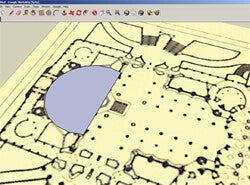
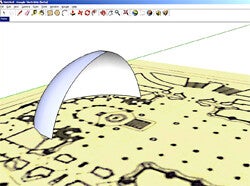
Using Google SketchUp, I constructed a digital model of the apse based on an authentic church plan. Translating the design from a two-dimensional blueprint to three-dimensional form helped me explore the sanctuary’s essence. It revealed the space as a haven of safety and sacredness, and ultimately, as a space for communion with the Divine.