Design Fiction
The Making of a Destiny
SEN Architecture
Niche Construction
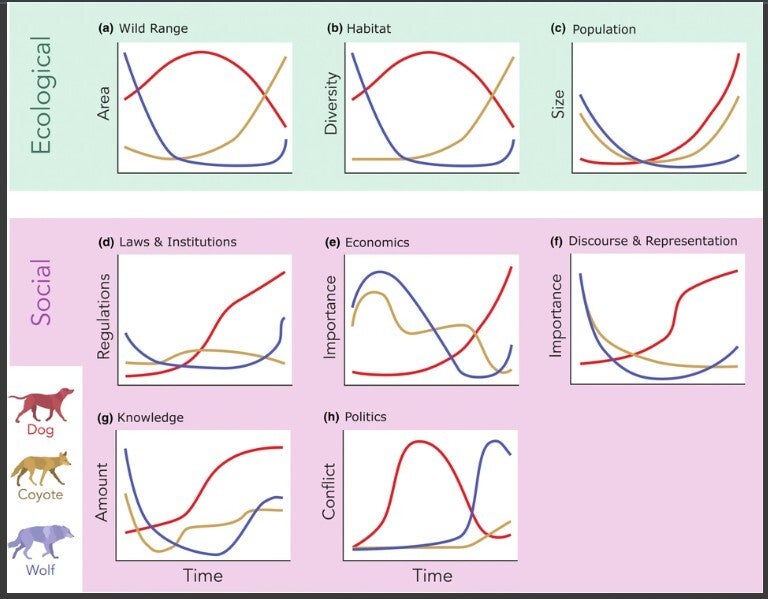
Figure 2
A diagram of the interaction between dogs, coyotes, wolves, and humans over 250 years.
Figure 2 shows that animals are influenced by more than just habitat. It's an example of the current situation: they are also affected by social values that lead to laws, economics, and culture, which then shape human behavior, environmental conditions, and, finally, species outcomes, which at present are not faring well.
Social values → laws/economics/culture → human behavior → environmental conditions → species outcomes.


However, SEN construction can intervene and improve the situation shown in Figure 2 by viewing buildings as more than just objects on a site. The main point is SEN construction changes this path.


It helps create a healthier environment by changing how people, wildlife, landscapes, culture, and institutions connect.
Social values → SEN → human behavior + habitat conditions → new human/wildlife relationships → better habitat conditions, leading to new relationships between people and wildlife and different environmental results.


It encourages coexistence instead of separation. Buildings and their surroundings help keep wildlife corridors open, reduce habitat fragmentation, manage night lighting and noise, protect water systems, add vegetation and habitat, and guide people to areas where they cause less disruption. In this way, SEN construction changes how humans and other species meet and interact.
The building form came from environmental data.
Dancing with wolves.
The imagery exposed itself afterwards.
Still, SEN construction goes further by showing that buildings can affect several of these areas at once. A research pavilion, museum, visitor center, or public landscape can help people understand natural processes.
These spaces can share scientific and Indigenous knowledge, let visitors watch wildlife without causing harm, support research, and give the community a place to join in conservation. These constructions act as a link between human and nonhuman systems, not as a barrier that separates them.