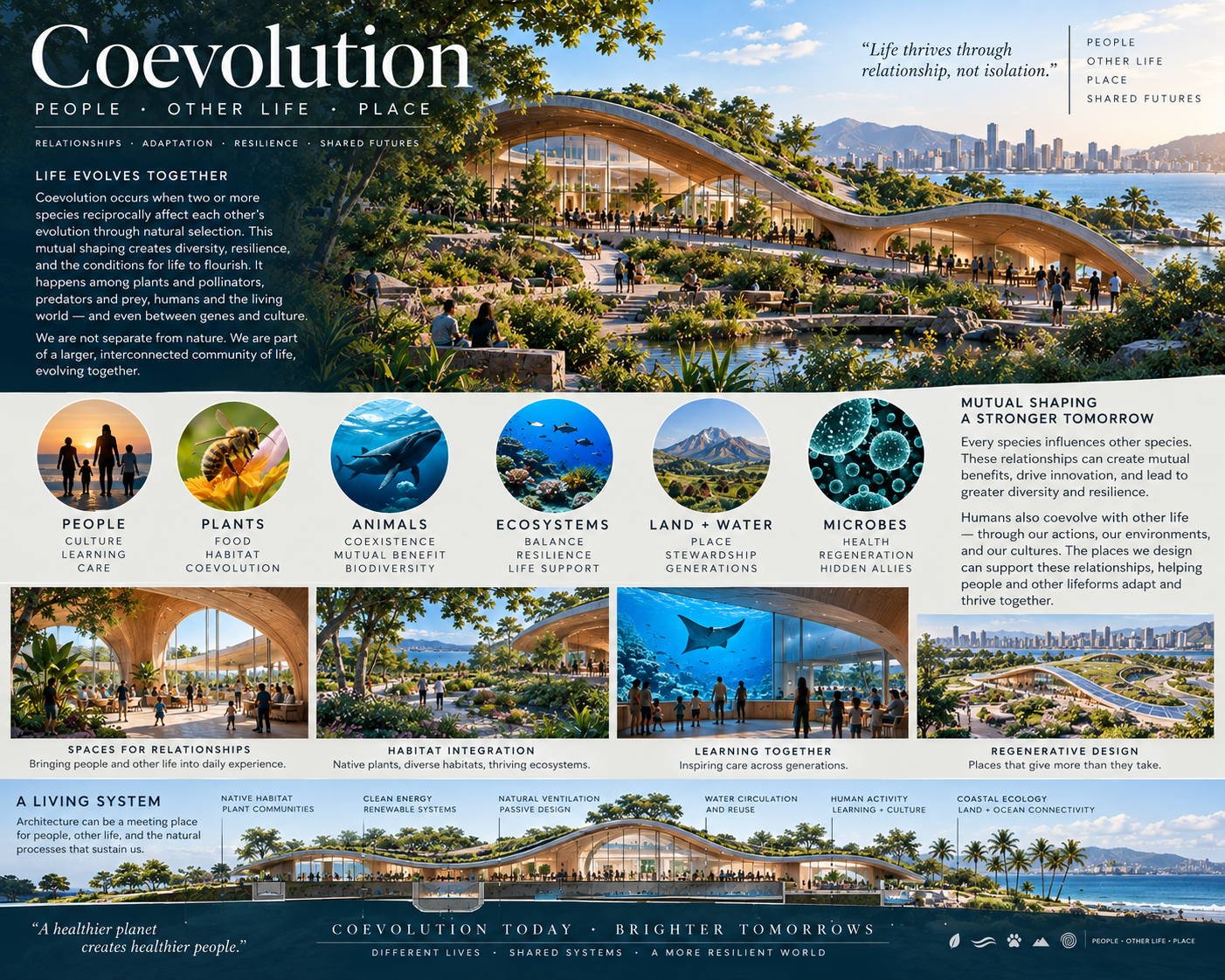
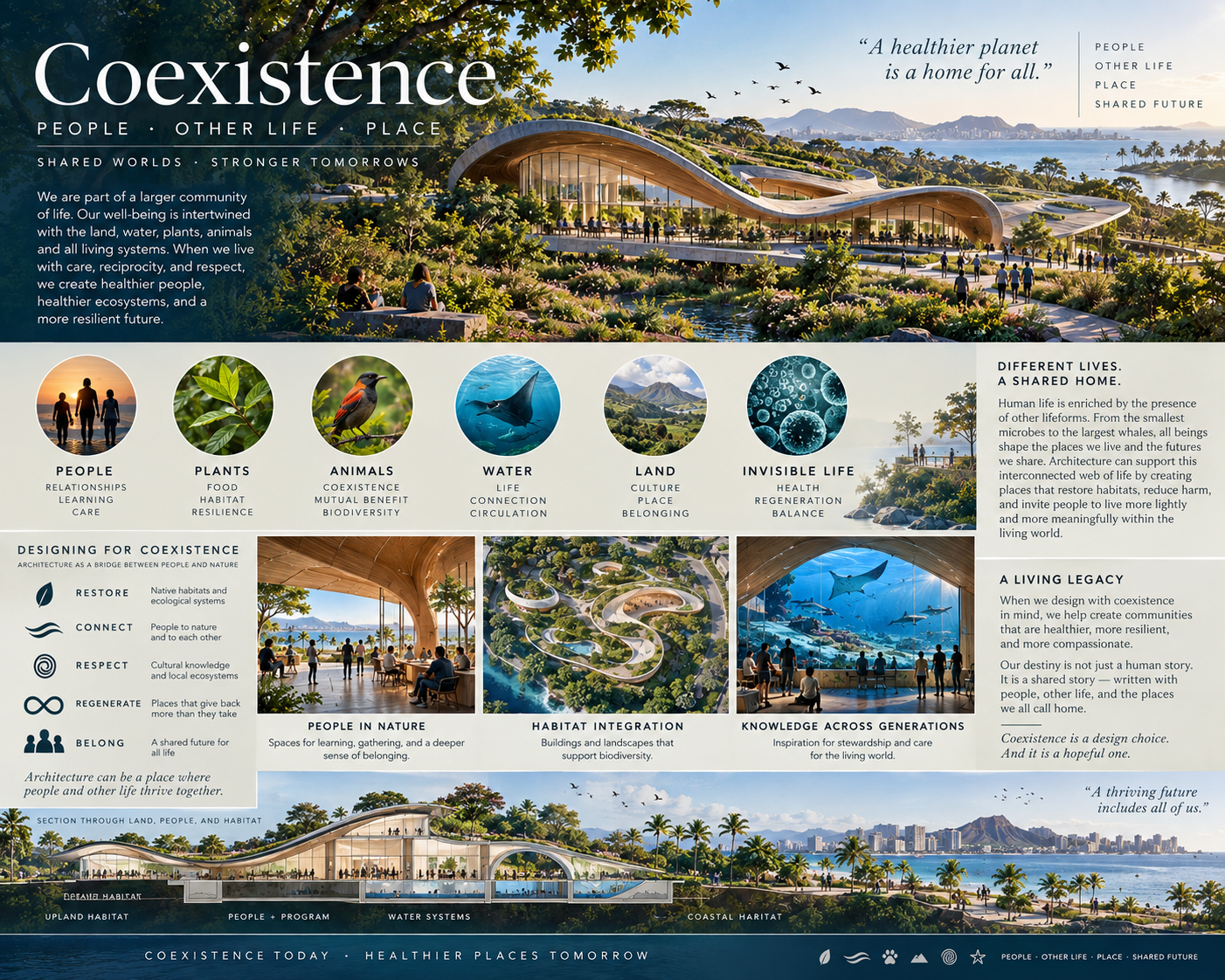
Human beings have never developed alone. We have always developed through our relationships with one another, the communities we create, and the other forms of life we share the world with.
Gene–culture coevolution is one way to understand these relationships. Our biology influences how we behave and organize ourselves, but the cultures we create also influence how we live, learn, cooperate, and ultimately evolve.
Biology and culture are not separate stories. They continually shape one another.
But human evolution has never occurred in isolation from the rest of life. Plants, animals, microorganisms, landscapes, climates, and ecosystems have all helped create the conditions in which human societies developed. Humans, in turn, have altered the lives and evolutionary environments of many other species.
Our story is not simply a story of humans evolving alongside other humans. It is also a story of coevolution.
An important part of human development is our ability to learn from other people. Instead of each generation starting over, people inherit knowledge from those who came before them. They learn it, change it, improve it, and pass it forward.
Much of this accumulated knowledge comes from learning how to live within a larger living world: understanding plants, animals, seasons, water, soils, weather, food, shelter, and the behavior of other species.
Over many generations, this creates a kind of cultural ratchet. Once useful knowledge becomes part of a community, it does not have to disappear when one individual dies. It can become part of the shared knowledge of a People.