Design Fiction
The Making of a Destiny
The Socio-Ecological Niche
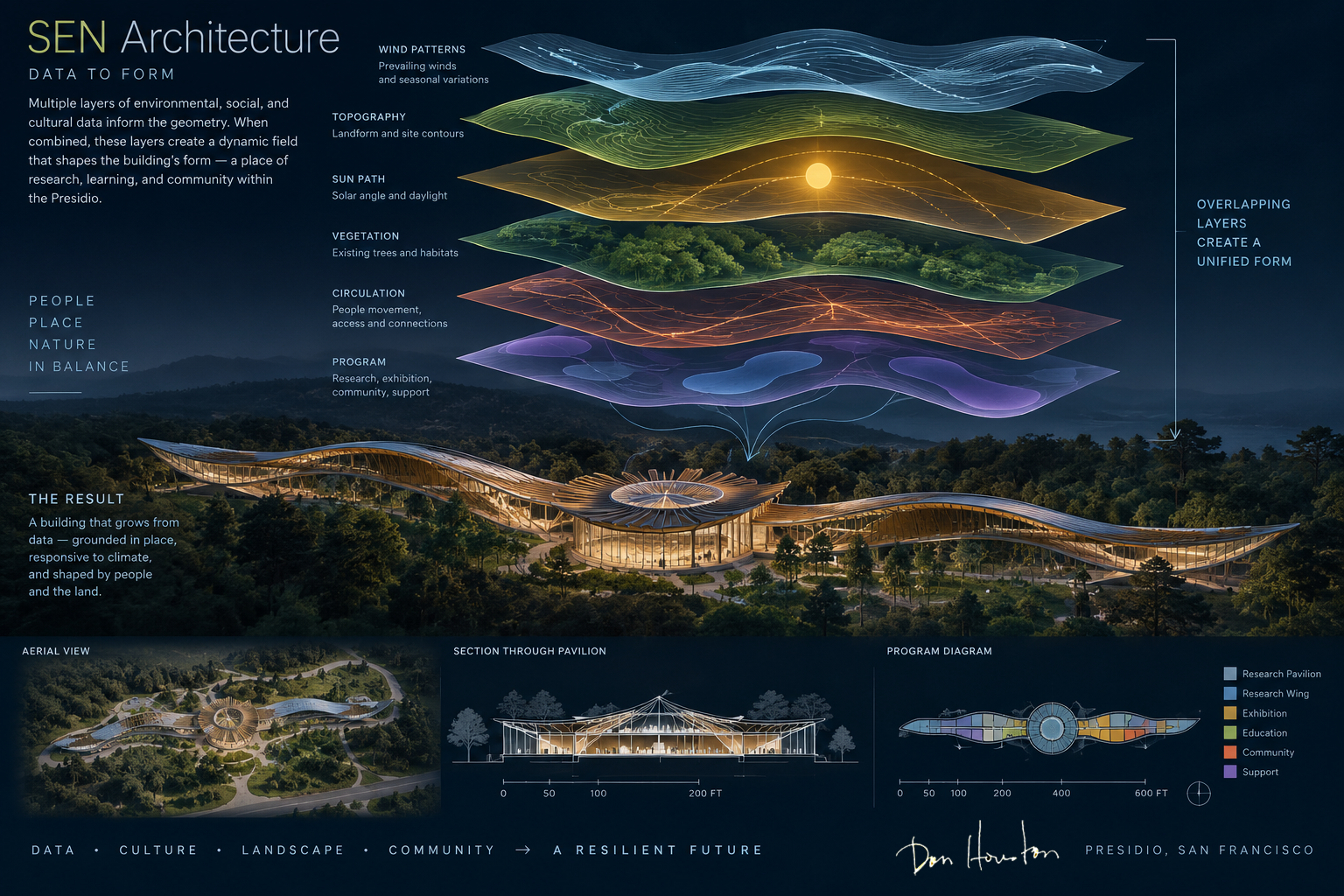
SEN Architecture
pronounced Zen
I sensed from A Pattern Language that the alcove-or-niche idea was important. I did not know how it related to the bigger question of redefining the mission of environmental design and architecture. But it captured my imagination. Fortunately, I found answers as I continued to pursue an escape from European cultural hegemony.
As it turned out, the word alcove comes from the French alcôve, derived from the Spanish alcoba and the Arabic al-qubbah, meaning "vault" or "domed chamber." However, from an ecological perspective, the word "niche" better suited environmental design and architecture’s role in defining habitat as a living organism that must interact and coexist with plants and animals.
At the heart of this concept lies a single, powerful idea:
A species does not just live in an environment; its role in the world is shaped by a network of natural conditions, human society, history, culture, knowledge, power, and complex relationships. Conservation is more than protecting single species or habitats; it asks us to respect the whole network of species, people, and their connected relationships.
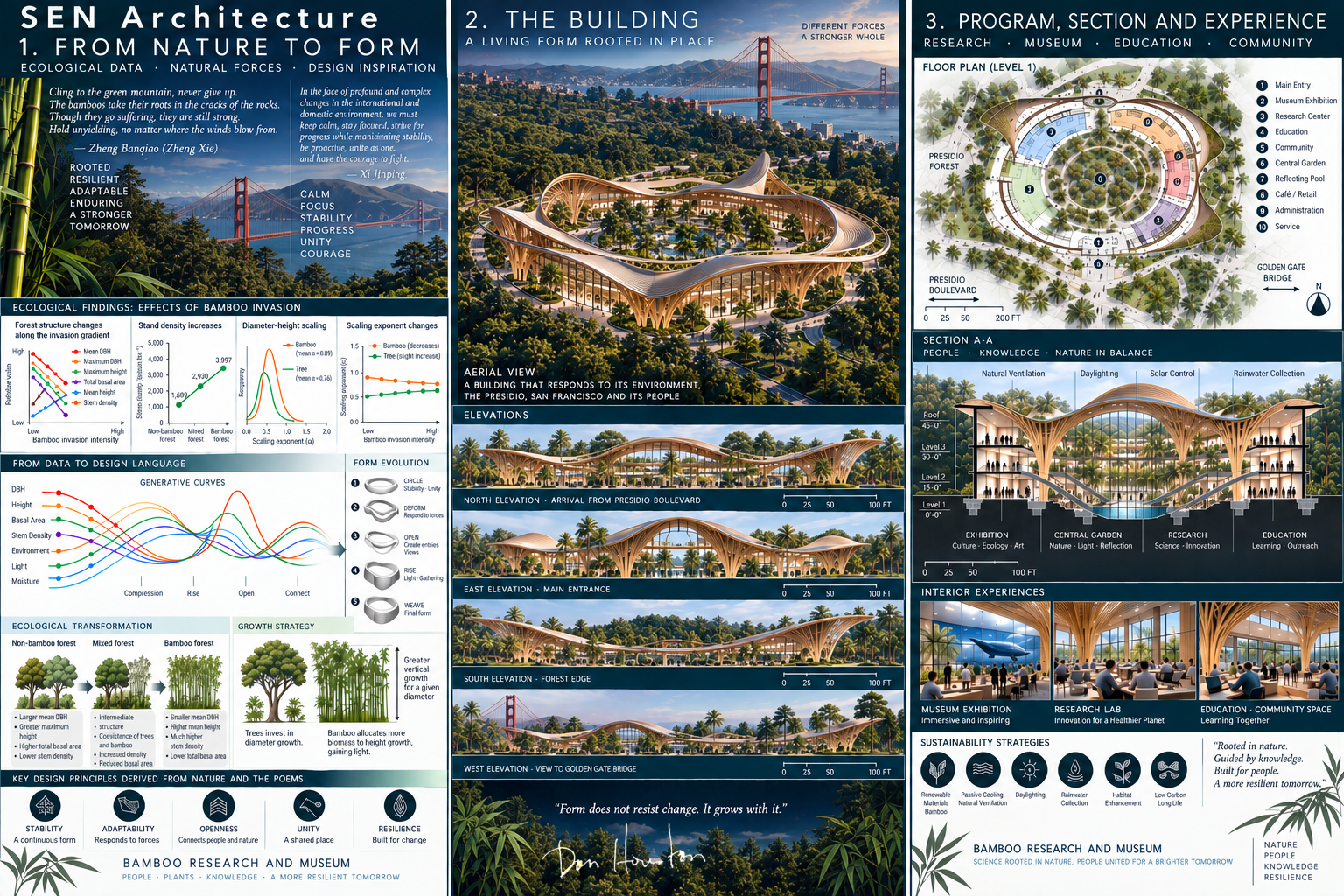
The SEN changes how we see ecology. Instead of looking at species separately, it encourages us to explore the rich mix of relationships and overlapping systems. By better understanding the complex and sometimes unexpected roles that non-human species play in today's human environments, SEN introduces the concept of a 'socio-ecological imagination.'
This form of imagination provides insight into the active, ongoing relationships among humans, nonhumans, and ecosystems, and how our interactions with them leave lasting effects on both our communities and the nonhuman world.