Piercing Cultural Hegemony
The call begins as a whisper rising from a cold, dark place of isolation—a place where being seen, heard, or even recognized seems almost impossible. The voice feels trapped there, nearly stripped of hope, carrying the weight of profound psychological and emotional pain.
Yet the whisper is also an invitation.
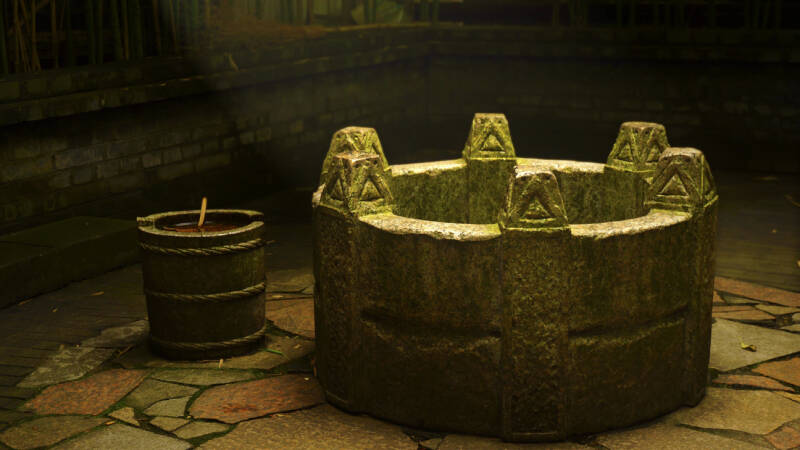
It suggests that understanding cannot always be found by looking upward or outward. Sometimes we must descend—into memory, sorrow, and the hidden chambers of the self—because, as the old metaphor reminds us, truth lies at the bottom of a well.
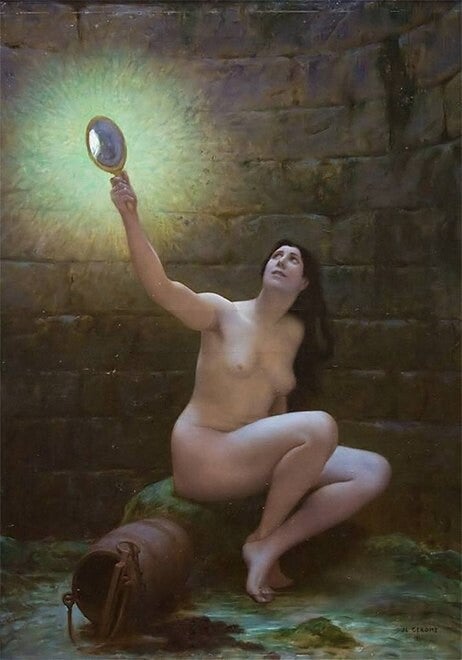
Truth is at the Bottom of the Well (1895) by Jean-Léon Gérôme, Musée des Beaux-Arts de Lyon.
I imagined Truth much as Jean-Léon Gérôme painted her: a woman emerging from a well, confronting the world with a mirror. For me, that mirror became a symbol of self-reflection—the feminine presence that asks us not merely to look, but to truly see.
But in my vision, Truth was not emerging from the well.
She was still waiting at the bottom.
And she was a Native woman.
The descent required resilience. It demanded determination and a willingness to look deeply into places within myself that were difficult to confront. But once I reached the bottom, something changed. What had seemed like the lowest point became something else entirely.
The bottom became a foundation.
Rather than remaining imprisoned within the darkness, I began to build upon it. Sorrow became material. Memory became structure. Reflection became a means of transformation. From that foundation, I could begin the long ascent toward the light.
Before emerging, I looked once more into the mirror.
What returned was not quite the person who had descended.
I emerged carrying the darkness with me, but no longer confined by it—renewed, transformed, and able to give form to what had once existed only as a whisper.
That is how I answered the call.
I answered it as you will see, through my work, Sacred Blood.